

People leave jobs for a bunch of reasons; but what’s #1?
What do you think is the number one reason why employees leave their job? What about why members leave organizations? We can name the usual suspects; we think people leave because they are underpaid, overworked, or undervalued, which is true.
Yet, there’s a critical lever in this equation we’re not giving enough attention to → managers.
Did you know managers account for 70% of variance in employee engagement scores? Or an employees’ experience with their direct manager is responsible for up to 60% of voluntary turnover?
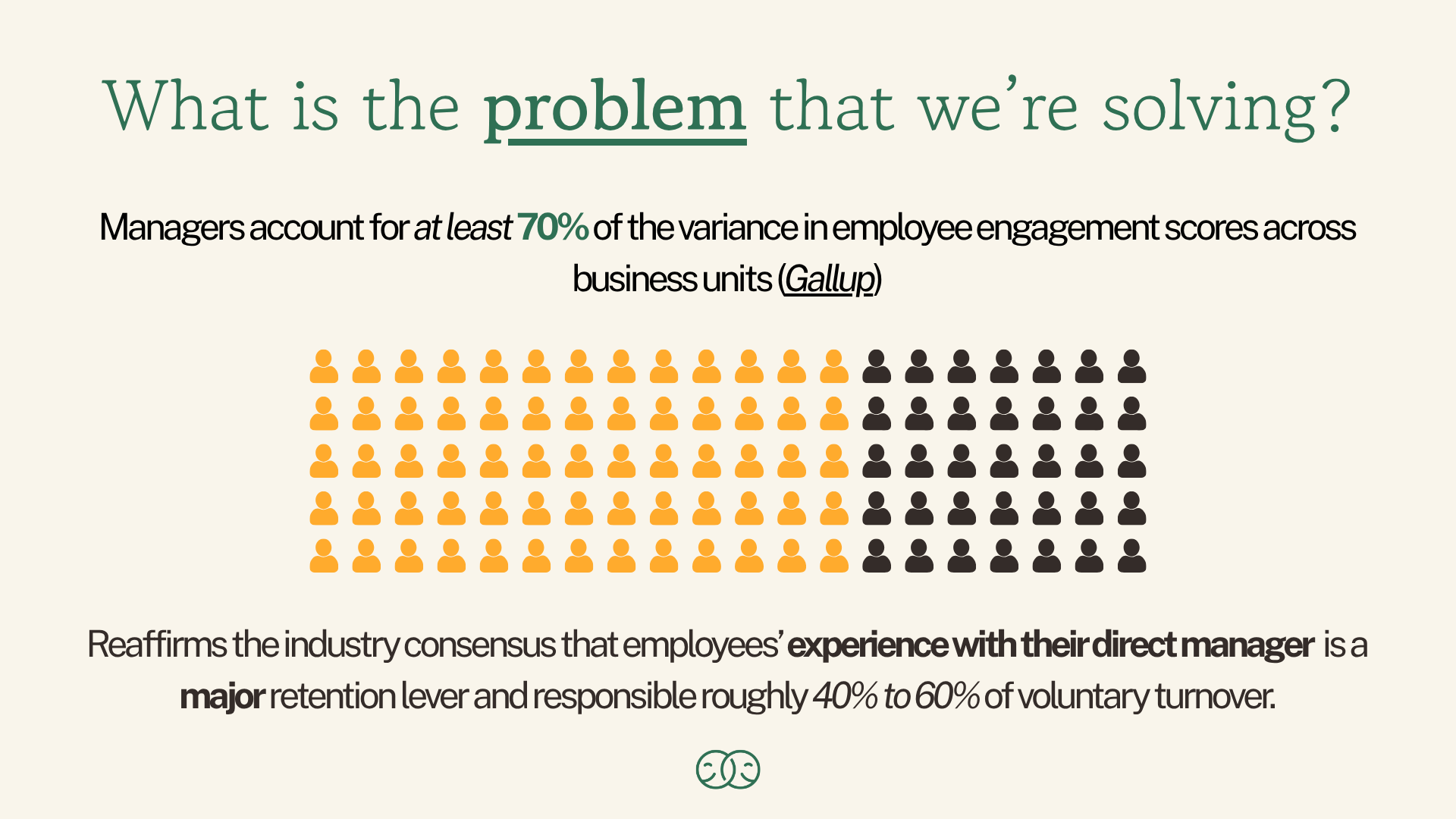
Anecdotally, we hear most folks become disengaged at work or voluntarily leave their role due to their experience with their direct manager. I was talking to a friend recently who shared she believes the most important things you can learn in an interview process are:
1) Who will be your direct manager?
2) What is their approach to management?
3) How many team members have they lost to voluntary exits in the past 12 months?
The answers to these questions can tell you if this will be a long-term employment opportunity or an uncomfortable stepping stone to the next thing.
In this, I don’t know if companies understand just how much poor management is costing the organization. If we break it down,
Estimated annual loss from manager-related turnover =
total voluntary turnover cost × 40% (Manager-attributable share)
It typically costs a company at least the amount of the employees’ salary to replace a voluntary exit, meaning if an $60,000 employee resigns; it will cost the organization approximately $60,000 to replace them. This takes into account recruiting, reviewing, interviewing, selecting, onboarding, and all the time it takes from other employees. This means if your organization loses just 10 employees in a year, and estimating on the lower end managers holding 40% responsibility; your company just lost $240,000.
$240,000 =
10 voluntary exits × $60,000 replacement costs (1.0x salary) × 40%
That’s if your organization loses just 10 people.
This doesn’t have to be the story of your organization. There are really simple ways we can shift the experiences of our teams, help our managers have more clarity, and enhance our team culture through practical measures. First, we help our managers see what others miss through assessment tools on the weekly, quarterly, and annual basis. Then, we empower managers to lead like it’s on them and take accountability for their teams. At Interconnected, we believe accountability begins the moment you see what's actually happening and choose what to do with that knowledge.
With assessment data and accountability structures clear, we want to dive into educating our managers on practical tools to make their teams stronger and spot issues more quickly. The tools should be utilized like a playbook, where you run the plays you need to win the game. After managers are equipped with the knowledge and tools, we have to support them in implementation as soon as possible. Most organizations slow play these transitions, I’d encourage you to have your managers jump in and take it back Monday.
The reality is, most managers were never actually taught how to manage people.
You were promoted because you were great at the work, then handed a team and expected to figure out the rest. The result is a manager who is very capable at their craft but underprepared for the complexity of leading people, making decisions under pressure, and moving a team forward without burning everyone out, including themselves.
If we want our organization's team culture thriving, disengagement lessened, and goals met, we have to flip this status quo.

Author
Qy’Darrius (Q) McEachern
Great employees get promoted to be managers everyday, but most are never taught how to manage people.
We help managers feel more confident and be better equipped to manage their teams.